Sour beer is a category of craft beer with a pronounced acidity that comes from lactic acid bacteria or wild yeast. Unlike traditional beers, where hop bitterness or sweetness dominates, sour beer offers refreshing, tart flavours, often with fruit, and can taste like lemonade or wine.
What exactly is sour beer and where does its taste come from?
When we think of beer, most of us picture a golden lager with a white head and a familiar bitterness. But the craft beer world is much richer, and its most intriguing corner is sour beer. For many newcomers the idea of "soured" beer sounds strange, but in fact it's one of the oldest and most complex ways of brewing.
In traditional brewing, the process is kept sterile — no bacteria are allowed anywhere near the wort. With sour beer, those rules are turned upside down. Brewers deliberately add specific bacteria such as Lactobacillus (the same ones behind pickles and yoghurt) or Pediococcus. They turn sugars into lactic acid, giving the beer its distinctive, "electric" character.
Why is sour beer so popular? Above all, it's refreshing. On a hot afternoon in Wilanów, a cold glass of Gose works far better than a heavy, hoppy Double IPA. It's a beer that breaks the rules and opens the door to people who don't enjoy classic beer bitterness.
Traditional lagering vs wild fermentation
The difference between a traditional beer and a sour starts with the recipe. In classic styles such as pilsner or porter, the brewer has full control over what happens in the tank, using selected brewer's yeast that behaves predictably. In sours, especially spontaneously fermented ones, part of that control is handed over to nature.
The key differences in the process:
- Microflora: Instead of yeast alone, brewers use blends of bacteria and wild yeast (such as Brettanomyces).
- Time: A traditional beer can be ready in a few weeks; some sours (such as Lambic) mature in barrels for years.
- Hops: Sours use very few hops, because acidity and bitterness often clash.
- Additions: Sours love fruit — raspberries, cherries, passion fruit and mango are standard.
- Sensory profile: Dryness and acidity instead of malt sweetness.
What are the most popular sour styles?
If you're just starting to explore sours at Taproom Wilanów, the names can feel overwhelming. Each style has its own history and its own balance of flavours.
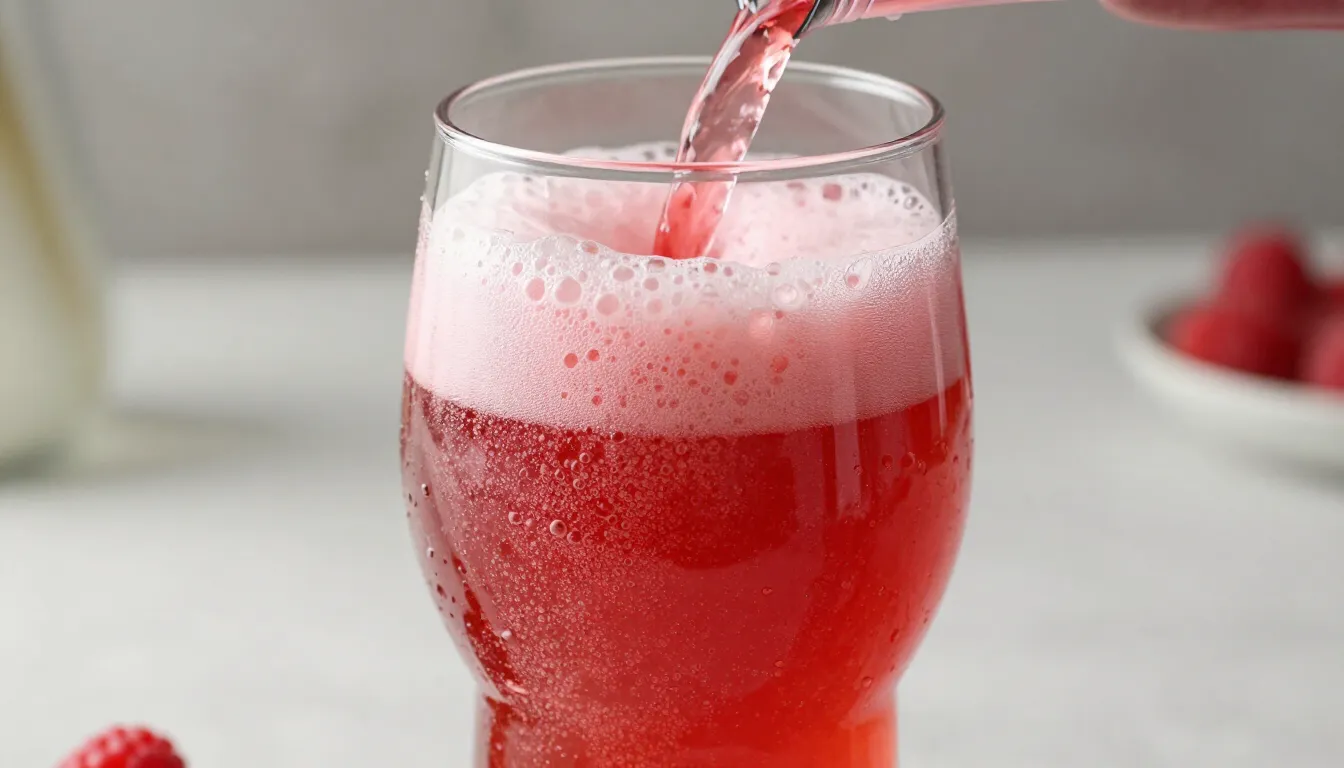
Berliner Weisse is a German classic, once called the "Champagne of the North". It's light, very pale and low in alcohol. Traditionally served with raspberry or woodruff syrup, today craft breweries more often add fruit while the beer matures. It's the perfect "first sour".
Gose comes from Leipzig and is unusual because it's… salty. Yes, Gose is brewed with sea salt and coriander. The result? Amazing drinkability and a profile that quenches your thirst in no time. The saltiness makes you want another sip, and the sourness is usually gentle and fruity.
Lambic and Gueuze are the advanced class, straight from Belgium. These are spontaneously fermented beers, meaning the brewer lets wild yeast from the air "infect" the wort. Lambics are often very dry, with a "horsey" aroma (fans call it funky), and they're the base for the famous cherry beer, Kriek.
Pastry Sour is the modern answer to a sweet tooth. Picture a sour beer with huge amounts of fruit purée, lactose (milk sugar) and vanilla. The result is a thick, sweet-and-sour drink that tastes like liquid blueberry cheesecake.
Why does sour beer taste so different from a classic pils?
It comes down to biochemistry. In classic beer, the main counterweight to malt sweetness is hops, which bring that familiar, sometimes lingering bitterness. Sours have almost no hops. Acidity takes over as the counterpoint (sour beer has a much lower pH than traditional beer, often around 3.0–3.5).
Our taste buds associate acidity with freshness. It makes your mouth water more, so flavours come across as more vivid. That's why fruit in a sour tastes "fruitier" than in a sweet lager. The experience is closer to a dry white wine or homemade lemonade than to a typical canned beer.
Sours at Taproom Wilanów: what to try?
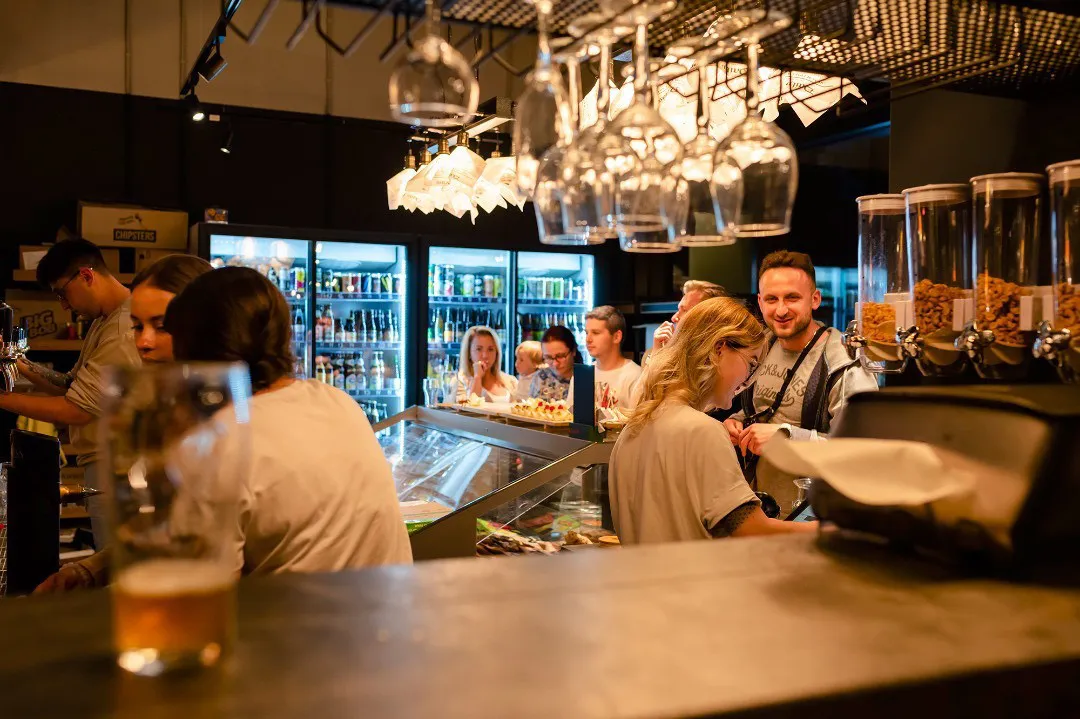
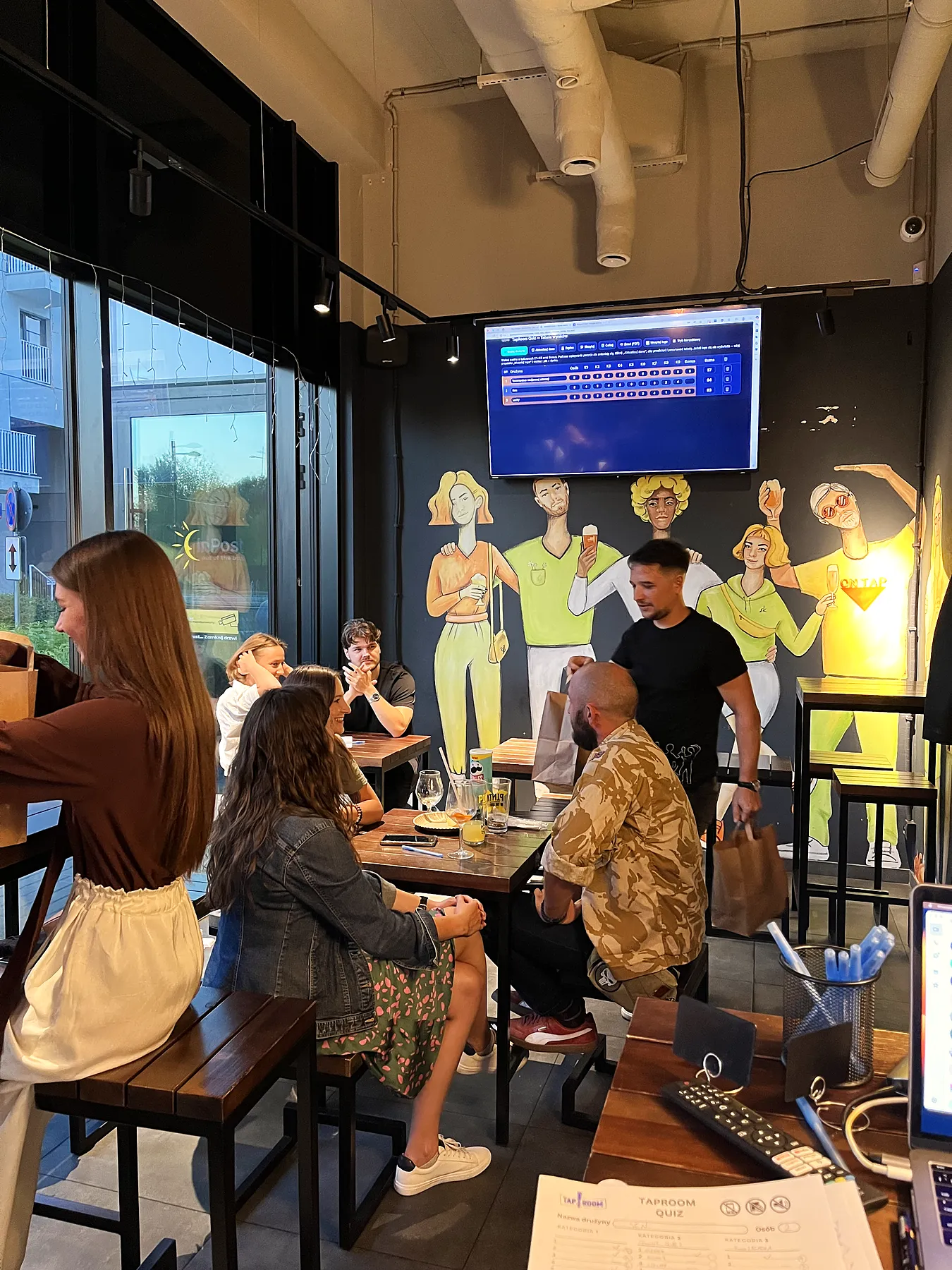
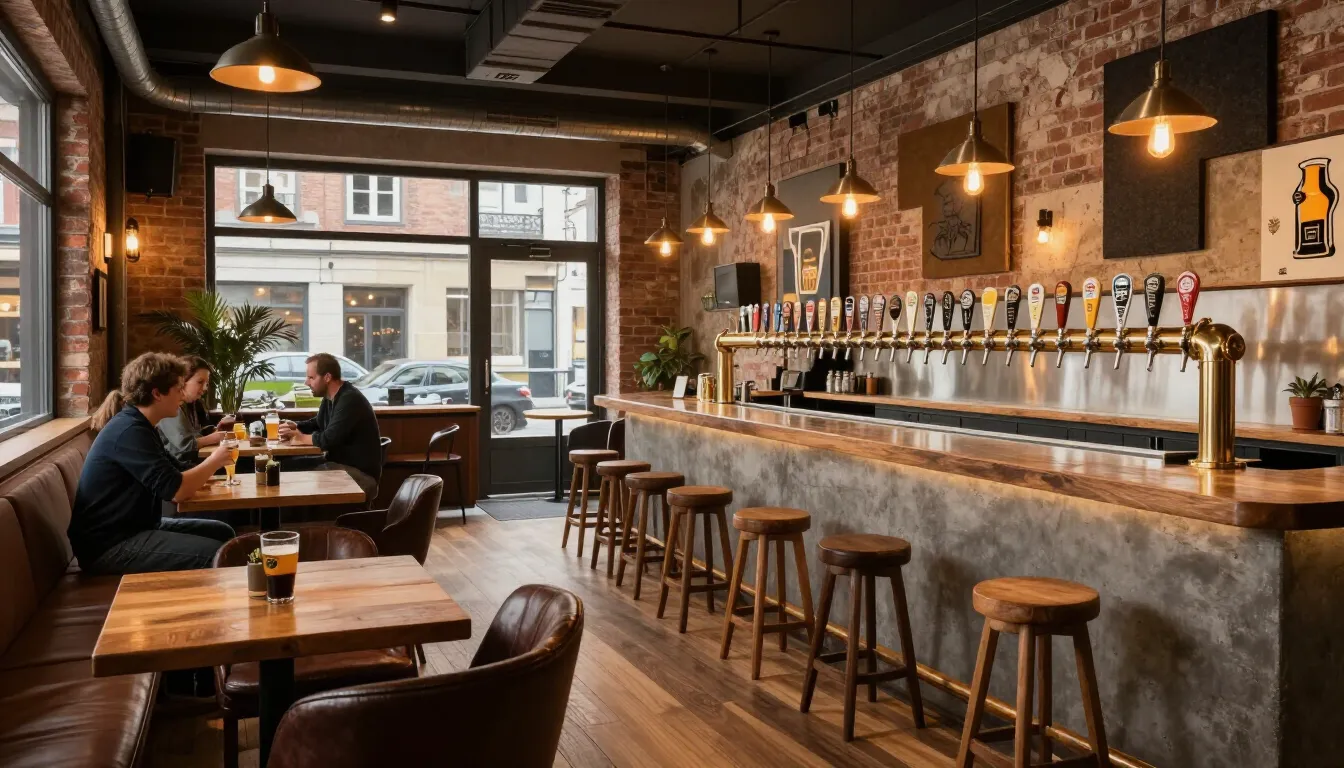
If you live in Warsaw — especially in Miasteczko Wilanów — you're in luck. At Taproom Wilanów we have 22 rotating taps, and sours always have a place on them. The line-up changes almost every day, so every visit can be a new tasting lesson.
What makes tasting with us special?
- Rotation: We work with the best Polish breweries (such as Funky Fluid, Maltgarden and Pinta), masters of the sour style.
- Freshness: Fruit beers taste best fresh. Our kegs don't sit around for months.
- Advice: Our staff are enthusiasts. Not sure where to start? Tell us which fruit you like and we'll pick a beer for you.
- Tasters: You can always ask for a small taste before ordering a full glass.
Come not just for the beer but for sport, too. Imagine the excitement of a Champions League match, cooled down with an ice-cold Berliner Weisse. A combination you have to try!
What to drink sour beer with?
Pairing food with sours is pure pleasure. The acidity cuts through fat and cleans the palate.
Our menu has snacks that suit the sour profile perfectly:
- Dried fish and beef jerky: The salty, intense meat balances beautifully with a fruity Gose.
- Cheese: Mild goat's cheese or strong blue cheese makes a restaurant-worthy pairing with Lambic.
- Light snacks: Crisps, nuts or crackers are a safe choice with a light Berliner.
- Desserts: If you're drinking a Pastry Sour, treat it as a dessert in itself or pair it with something with a similar fruit profile.
A beginner's guide to sour beer
To sum up, sours are not just a trend but a return to brewing's roots in a modern craft form. They differ from traditional styles in their lack of bitterness, their use of specific bacteria and an endless range of fruit additions.
A quick reminder of why they deserve a chance:
- Incredibly refreshing: Perfect for warm days.
- Rich flavour: From extreme sourness to dessert-like sweetness.
- Availability: In Wilanów you can get the best examples straight from the tap.
- New horizons: If you say "I don't like beer", a sour might change your mind.
Whether you're an experienced hophead looking for a break from IPA or just starting to explore our beer blog, Taproom Wilanów is a place where the way you see beer could change for good. Drop in, take a seat at the bar and let the wild side of fermentation carry you away.
See you at the taps in Miasteczko Wilanów!