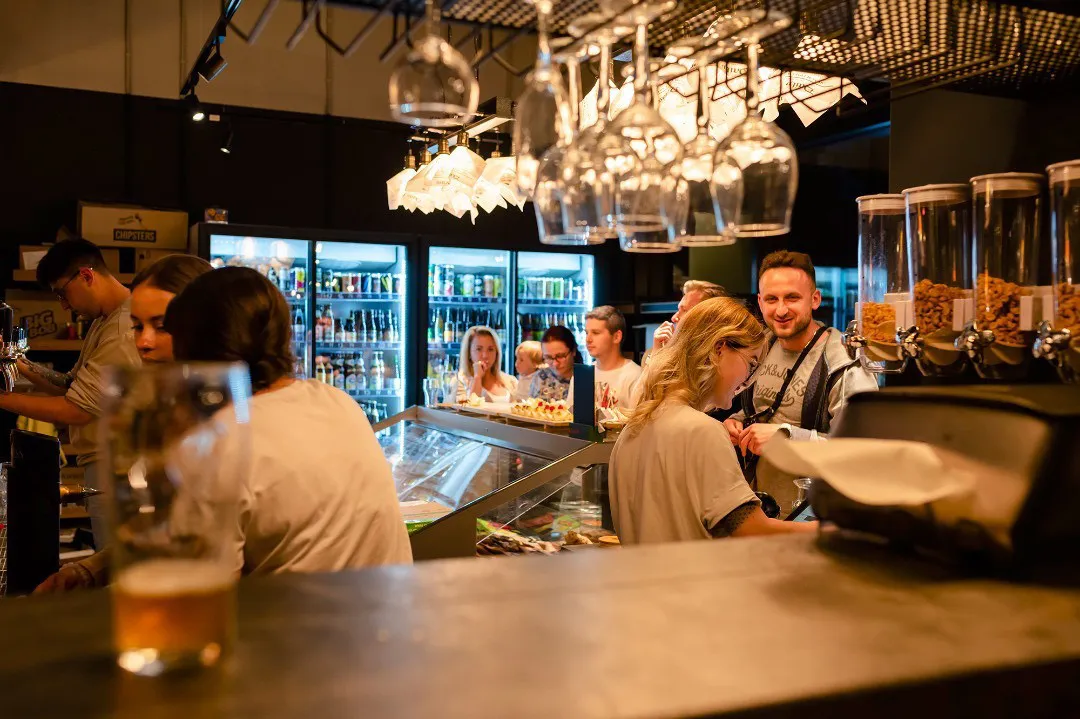

Draught beer is a bar's calling card — and the most common source of problems when the installation is badly chosen or neglected. Too much foam, flat beer, an odd taste: most of the time the culprit isn't the keg but the installation. Here's what we pay attention to at TAPROOM Wilanów, where 22 taps work every day.
What an installation is made of
- Cooling — a flow cooler or a cold room for the kegs. The beer must reach the tap at a steady, correct temperature.
- Gas — a CO2 cylinder (or a CO2/nitrogen mix) with a regulator that keeps the right pressure in the keg.
- Lines — the hoses from keg to tap. The longer the run, the more the diameter and pressure matter.
- Couplers, taps and the tower — what guests see, and what needs cleaning most often.
Companies that design and fit installations and sell coolers and taps are listed under beer installations and cooling in PiwnaBaza, our directory of suppliers for bars in Poland.
CO2 and gases
Carbon dioxide isn't just “the gas that pushes the beer” — pressure decides carbonation, and so whether the beer is crisp, flat or over-gassy. Different styles need different carbonation, and some beers (stouts, for example) are poured with a nitrogen mix for a creamy head. Arrange regular cylinder deliveries and always keep a spare — an empty cylinder on a Friday night is a classic. See CO2 and technical gases.
Line cleaning — the most important routine
Yeast, beer stone and bacteria build up in the lines, causing off-flavours, haze and excessive foaming. Lines need cleaning regularly — in practice usually every week or two, and always when switching to a very different style — with products made for beer installations, following the manufacturer's instructions. Taps and couplers are worth taking apart and cleaning separately.
If you lack the time or staff, hire a service company — many offer a regular cleaning and inspection plan. See installation servicing and repairs and cleaning and hygiene products.
Glassware matters
Even the best beer loses to a greasy glass: the head collapses and bubbles cling to the sides. Wash beer glasses separately, without rinse aid, and rinse them in cold water just before pouring. The right glass — a goblet for Belgians, a tall glass for wheat beer, a tulip for IPAs and stouts — brings out the aroma and sets your bar apart. See glassware and bar equipment.
How many taps to start with?
Fewer, but well kept. Every tap is a keg that has to sell before the beer loses freshness. In a small bar, 3–6 taps with a lager, a wheat beer or pale ale and one rotating craft beer is a sensible start; you can always expand later.
Where to find suppliers
All categories of suppliers for bars — from breweries and wholesalers to installations, gases and servicing — are in PiwnaBaza, a free, open directory run by TAPROOM Wilanów: you contact the companies directly, with no middlemen.